
The first time I toured Europe was before widely available internet on phones and certainly before google maps. We printed out AA Route finder instructions for how to get places and if you missed a turning you had to ask for directions. It was SUPER hard to know what tolls or payments you needed to make while on the road, and we got caught out and fined on more than one occasion. I thought i’d put together a list of the tolls and other road taxes you might need to pay around Europe to collect it all in one place.
☕ Leave a Tip
If the information in this post is worth anything to you, you can leave a tip here:
Support on Ko-fi →Note: Trying to cover the whole of Europe in one place means this may be out of date almost as soon as I hit publish. Please double check the countries you’re travelling to, and look out for road signage that might indicate payment is needed. As always, this is not legal advice – it’s writen from my experience of touring Europe and how things have worked for me.
The 3.5 Tonne Cut Off
Your splitter van almost certainly has a Gross Vehicle Weight (GVW) of 3,500 kg. This is important because it’s the dividing line between being treated as a car and being treated as a truck. If your van’s GVW is 3,500 kg or under, you’ll typically pay car-rate tolls and use standard vignettes. It’s the van’s technically permissible maximum laden mass (TPMLM) as stated on the V5C/registration document that matters, not how much it actually weighs at any given moment, But some countries (notably Austria and Germany, which have installed hundreds of new weigh-in-motion sensors) are increasingly checking real weights too.
It’s worth reading my post about weight restrictions in touring vehicles here. Being over that weight limit impacts many other things than just the toll charging bracket – so it’s important you understand the implications of being over weight!
This post will only cover vehicles under 3.5 Tonnes.
Do You Need an International Driving Permit?
If you hold a UK photocard driving licence, you do not need an International Driving Permit (IDP) to drive in any EU country, nor in Switzerland, Norway, Iceland, or Liechtenstein. Your UK licence is recognised across all of these.
Note: You may need an IDP if you only have an old paper driving licence (the green one). If you’re hiring a van in Europe rather than taking your own, some rental companies will ask for an IDP regardless. Check with them in advance.
Tachographs
You almost certainly don’t need a tachograph if you’re driving your own band or a band you’re working for, but i’ve written a longer post about this here.
Cabotage
Post-Brexit, UK hauliers are limited in how many pick-up/drop-off movements they can make within EU countries. If your splitter van has nine seats or fewer and is under 3.5 tonnes, you are not subject to cabotage restrictions. For most touring bands in a standard splitter this isn’t something you need to worry about.
Tolls & Vignettes
It may seem obvious, but its probably worth explaining what these are and how they’re different from each other.
A toll is a charge you pay each time you use a specific road, bridge, or tunnel. You stop (or pass through a sensor), pay for that journey and drive on, or drive through and pay for it online after the fact. The cost depends on the distance or route you’ve used.
A vignette is a time-based permit. You pay once upfront for a fixed period (a day, a week, a month, or a year) and that gives you unlimited access to a country’s motorway network for the duration. Rather than paying per journey, you’ve essentially bought a pass. Some countries use one system, some use the other, and a few (like Austria) use both – a vignette for the general motorway network, plus separate tolls on certain mountain passes and tunnels.
Country-by-Country Toll Guide
France
France has an extensive toll motorway (autoroute/péage) network, and you will be paying tolls throughout.
Your van will be classified based on height above the front axle:
- Class 1 (under 2m height, under 3.5t) – standard car rate, roughly €7–15 per 100km
- Class 2 (over 2m height, or towing) – around 50% more than car rate
Most splitter vans are over 2m tall, so budget for Class 2. You can pay at toll booths by card or cash, or use a Liber-t tagfor unmanned lanes.
There is a tool for estimating toll charges here.
There are No LEZ issues in central France, though Paris has restrictions in some zones. Worth checking your specific routing on Crit’Air — you may need a French emissions sticker (Crit’Air vignette, around €4.51) if driving into central Paris or certain other French cities.
Germany
Germany’s autobahns are free for cars and vans under 3.5T. If your GVW is over 3.5t, you’ll need to register with Toll Collect and use an on-board unit or pay in advance online. Rates depend on emission class and distance. Zero-emission vehicles get a partial exemption.
Germany has a patchwork of city-level Low Emission Zones (Umweltzonen). Most require a green Umweltplakette (environmental sticker, ~€6) if driving into city centres. Diesel vans meeting Euro 6 standards typically qualify for the green sticker. You can buy one from DEKRA, TÜV, or various online vendors before you leave. Check each city you’re playing in advance.
Belgium
Belgium has no tolls on motorways for vans under 3.5t. However, Brussels has significantly tightened its Low Emission Zone (LEZ): from 1 January 2026, Euro 5 diesel vehicles are no longer permitted to enter Brussels. If your splitter van is on an older Euro 5 diesel engine, you cannot drive it into the Belgian capital without risking a fine of €350 (after an initial warning letter). Euro 6 diesel vans are fine for now.
Check your van’s Euro emission standard on the V5C or via the DVLA.
Wallonia has also introduced LEZ coverage from 2026, so check routes through Liège and other major cities too.
Netherlands
No motorway toll for vehicles under 3.5t. There’s a single road toll on the A24 (€1.51 per trip), paid online after your journey.
From 1 July 2026, the Netherlands introduced a new distance-based truck toll (vrachtwagenheffing) replacing the Eurovignette – but this applies only to vehicles over 3,500 kg. Standard splitter vans are unaffected.
Some Dutch cities have LEZ restrictions – Utrecht tightened rules in 2025, and Amsterdam has restrictions for older diesels. Check urbanaccessregulations.eu for current rules for each city on your routing.
Switzerland
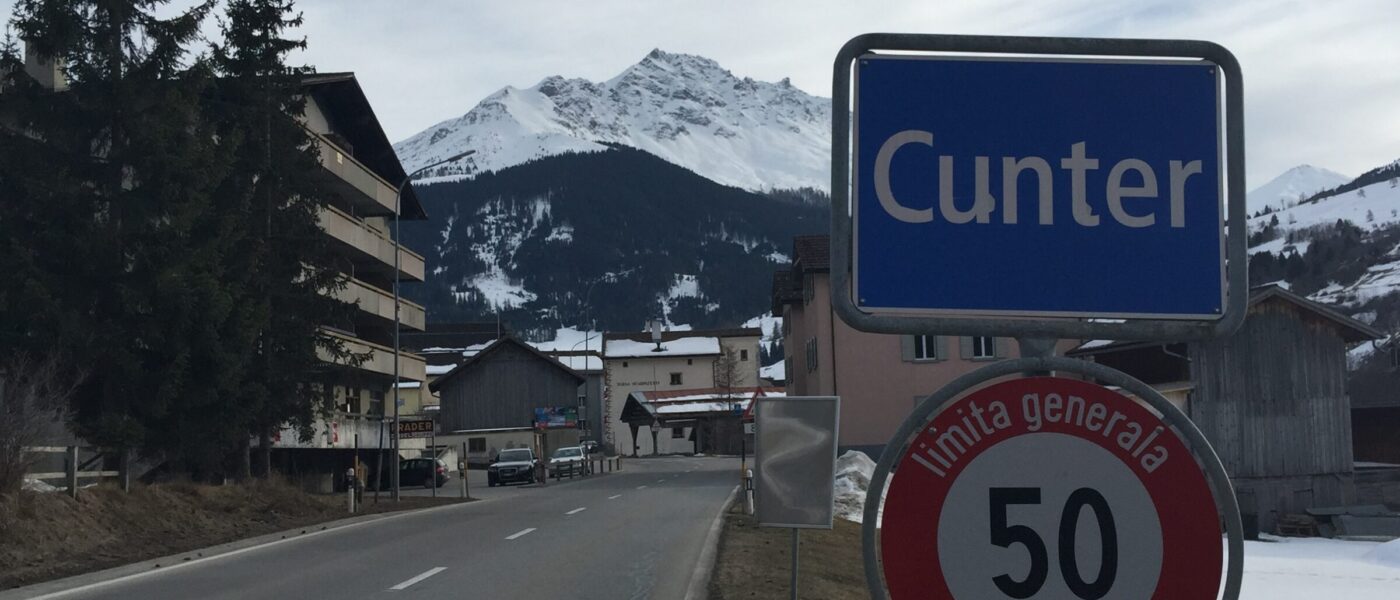
Switzerland requires a motorway vignette for all vehicles up to 3.5t. The 2026 vignette costs CHF 40 and is valid from 1 December 2025 to 31 January 2027, so one vignette covers any tour that falls within that window. Buy it at the border, online in advance, or at Swiss petrol stations. It’s now a digital e-vignette linked to your number plate. Theres no sticker to stick on the windscreen as would have been the case in the past..
If your van exceeds 3.5t, you’d be subject to the LSVA (heavy vehicle tax), which is distance-based and significantly more expensive.
Austria
Austria also requires a motorway vignette for vehicles up to 3.5t and is transitioning to a fully digital e-vignette (linked to number plate). The 2026 vignette is the last year physical stickers are available and from 2027 it will be digital only. Buy via ASFINAG or at border crossings.
Some mountain routes (Brenner Pass, Arlberg, Tauern Tunnel, etc.) carry additional road-specific tolls on top of the vignette.
Vehicles over 3.5t use the GO-Box system (distance-based tolling).
Czech Republic & Slovakia
Both countries require electronic vignettes for motorway use. Vignettes are bought online and linked to your number plate. They come in short-duration options (day, week, month) suitable for a brief tour. Costs are pretty reasonable – Slovakia’s 10-day vignette for a car-class vehicle is around €13.
Hungary
Hungary requires a motorway vignette (e-matrica). A 10-day vignette for a standard van is around €15-20. Bought online at e-matrica.hu or at petrol stations. Linked to number plate.
Spain
Spain’s tolled motorways (autopistas) use a per-kilometre barrier system. Vans under 3.5t are classified as Categoría I (Ligeros), paying approximately €0.10/km. Not all motorways are tolled – many autovías (A-roads) are free.
Spain is scrapping most of its motorway tolls on older concessions as they expire, so the network is gradually becoming more toll-free.
Madrid and Barcelona both have LEZ restrictions. Madrid Central and Madrid 360 restrict older diesel vehicles. Barcelona’s ZBE (Zona de Baixes Emissions) applies throughout the city. Euro 6 diesel vans are generally compliant, but verify for your van’s registration year.
Italy
Italy has an extensive autostrada toll network, with rates around €9 per 100km for standard vans. Pay at toll booths by card, or use a Telepass transponder for unmanned lanes. Height above the front axle determines your class of toll.
Several Italian cities operate ZTL (Zona a Traffico Limitato) zones including Rome, Florence, Bologna, and Milan. These restrict vehicle access at certain times, often requiring a permit. These are distinct from emissions restrictions and often apply to all vehicles. Research the specific ZTL rules for every Italian city on your itinerary.
Milan’s Area B LEZ bans Euro 3 diesel and older; Area C is a congestion charge zone in the historic centre.
Slovenia
Slovenia has a vignette system. Check dars.si for current classification rules.
Portugal
Portugal is progressively moving to free motorways — many former toll roads have had tolls removed in recent years. Where tolls remain, they’re generally low for cars/vans. Some roads use electronic-only tolling with no cash option; if you don’t have a transponder (Via Verde), you’ll need to pay online within a few days via the EASYtoll service. Look out for signs indicating “Electronic Tolling Only.”
Regulations change. Always verify current requirements via official national toll authority websites, tolls.eu, and urbanaccessregulations.eu before each tour.
☕ Leave a Tip
If the information in this post is worth anything to you, you can leave a tip here:
Support on Ko-fi →